

Selecting flooring
Kommentare (20)
 vor 8 JahrenZuletzt geändert: vor 8 Jahren
Not 1/10th the amount of information needed. Starting with what type of a foundation your home has, and your budget.
 vor 8 Jahren
...and... Where do you live? Humid climate, dry, north south, flood zone,? And what do you like? Hardwoods or tile? There are some tile floors that look like wood. Is tile something you might like? How many square feet? What is your budget? Do you like smooth or rough surfaces. There are some great options of hardwoods too. Do you live on slab or have a full basement or crawl space.? Do you like wood floors with a rustic appeal or classic and clean look maybe with knots and grains? I love the look of the same floor throughout. I would search on HOuzz to collect some favorites and then discover what can work in your space.
Nad T
Ursprünglicher Verfasservor 8 JahrenWe live in Ontario on the St Lawrence River! Our house is a side split - has 2 bedrooms and a rec room (with pool access) and crawl space in the basement and 3 bedrooms upstairs! The LVT flooring seems to be comparable in price to hardwood or engineered hardwood...I like the look and durability of LVT but worried about emissions from it...- vor 8 Jahren
Emissions aren't a concern so long as you stick with $4.50/sf or higher...and work with "Phthalates Free" material. If you are looking at $4.50/sf for LVT, then you are playing with REALLY low-end solid or engineered hardwood.
In a cold climate, you may want to be aware that some LVT can be COLD. Not as cold as tile, but certainly as cold as - well - vinyl.
I would look at having tile in the entrance areas (appropriate for snow and pool water) and then choose a wood product for the rest of the space. Wood is much warmer than vinyl. You live in a climate that accepts appropriate flooring in appropriate areas - tile or stone in an entrance, kitchen or bath = appropriate.
And I'm in Vancouver BC and have lived in N. Alberta (no pool access though) so I know the realities of where you are. You will want something warm in winter for the living areas and something durable for "wet" entrances. I know vinyl sounds like a great idea, but it is SUPER HARD to get a warm underpad underneath. Vinyl acts differently from laminate even though it looks like it when installed.
 vor 8 Jahren
listen to SJ. She knows her stuff. And correct me me SJ,,,wouldn't the wood last a lot longer than LVT? I would think resale would also be better.
I want to mention 'cold'. Have you considered slate in the 'wet' areas? slate maintains room temp and doesn't get freezing cold like tile. It's great for wet feet or boots, cleans up easily and stands up to kids/pets. as long as it's sealed, it's great.- vor 8 Jahren
Yah Beth, a solid hardwood is a "life long" floor. A vinyl floor has an expected life span of 15-25 years (depending on trends, etc). An engineered hardwood MIGHT have a "life time" worth of service but it has to be SUPER high end to live for 60 years.
And in Ontario, wood is highly sought after in LIVING areas...and SLATE is well accepted in wet areas because it is recognised as a valuable stone. Canadians love the look of 'valuable'.
Nad T
Ursprünglicher Verfasservor 7 JahrenSo do you think real wood is the way to go? I forgot to mention that we have 3 young children so we need a floor that is durable! What are your thoughts on laminate?- vor 7 Jahren
You will need to define "durable". A solid wood floor = 60 - 80 years of service. A wood floor (any version) has a finish on it that has an expected life span of 20 - 25 years. That being said, the finish will look "ratty" around about year 15. If you are OK with those numbers, then go for it.
If ANY of that scares you, then you need to look at tile, stone, concrete (not recommended in Ontario where winters can reach - 35C) or something LESS permanent like laminate or carpet.
Your (and your family's) personality must be taken into consideration. Wood is one of the most durable materials we have. But do not think DURABLE (as in length of service) means PERFECT. In fact wood gets scratched and dinged and "lived on" inside of a few years. But this is just window dressing. The FLOOR itself will out last your ownership of your home.
Nad T
Ursprünglicher Verfasservor 7 JahrenI looked at a bunch of flooring samples today...ceramic tile gives the durability and water protection we are hoping for but seemed really cold and permanent once installed...I am still not sure about LVT versus laminate versus engineered hardwood...When I asked about VOC the sales person said they all produce VOCs but didn’t know the different amounts each one produces....How do I find this out? Also, would you consider running the same flooring through-out the entire house or is that too boring?- vor 7 Jahren
Ceramic/porcelain flooring in Ontario is not a selling feature. In fact, even in moderate-climate Vancouver tile is something that people rip out once they purchase. If you want to go with tile, then you will need to look at in-floor radiant heating. For an entire home install it could add tens of THOUSANDS of dollars to your renovation (not to mention another 1/2" of floor height). Tile "sounds" great but has TREMENDOUS drawbacks in cold climates.
If it were me, I would go with tile in the kitchen/baths/entrance ways and then switch over to a floor that is warmer and will offer plenty of service. LVP is a great floor with tremendous durability. If you stick with the high-end products from Europe (Swiss or German or from a name like Toryls or Wicanders) you will be fine.
Finding VOC content is TOUGH. When I worked in the flooring industry, it normally took me 30 minutes of searching a company's website to find the Material Safety Data Sheets and the Technical Specifications (MSDS) on the products (you would have to know how to do a 'hidden' search). This 30 minutes was for each and every floor I was interested in looking at. I estimate I spent more than half a year (working year = 2000 hrs) searching the web for MSDS and Tec Sheets over my 6+ years in flooring.
The easiest thing to do is contact the manufacturer and ask for the two data sheets. You will need have chosen a colour from a specific line in their collection. You will need to reference it by name and will need to explain your square footage so that they see that you are a serious customer/purchaser.
In N. America, manufacturers must have these data sheets available to the public. They do NOT have to list them on a website. Most require that you ask. Which means you need to know what you are asking about and for. Which means you have to go to flooring stores (not big-box stores) and have seen/handled samples.
Whew. Factory finished solid hardwood is SOOOO much easier/safer that just about anything "man made" on the market today - other than porcelain tile. Nad T
Ursprünglicher Verfasservor 7 JahrenWow! Thanks for the info! Does engineered hardwood produce VOCs too? Which one produces more? If they are the same I would lean towards LVT if not I’ll go with engineered hardwood...- vor 7 Jahren
SJ - great info/advice. Similar question as the original post - our main floor is technically a basement in a very cold climate (Minnesota). We live off a lake.. so water resistance is a need as well as warmth. We've heard from countless "experts" to avoid real wood and go with vinyl planks. I don't like how it looks and based on this chain I feel more drawn to tile in our kitchen (which is on our first floor / walkout level) but don't know what to do right next to it in the living room.
- vor 7 Jahren
if you're going to do tile, then do slate. slate does not get cold like ceramic or porcelain. I've had a slate floor in my kitchen and love it. easy to care for if you keep it sealed. (i've done it 4 times in 13 years). just make sure to get the gauged slate. do a brazilian black slate, or a montauk black if you want a darker color.
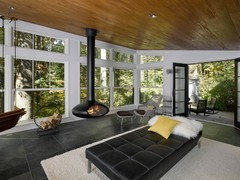

Basalt is another option
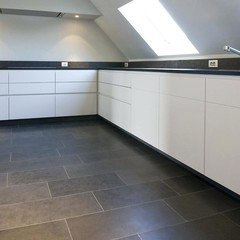
if you must to tile, do a nice large porcelain. I love this one because it looks like real limestone. 24x24 from tilebar
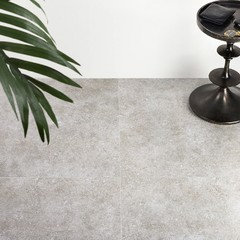
- vor 7 Jahren
SJ McCarthy, thank you for your excellent explanation. You are helping so many of us. ~boxer
- vor 7 Jahren
in ontario canada you have a full freeze thaw every year and don't have to worry about termites. Go with real solid wood. I like Bona Traffic finish, it does not stink, and the commercial satin wears extremely well, and does not give yellow tint.
The person applying the finish much be familiar with working with that specific product, or you will not get the best results, because it is not applied/handles the same way as other finishes.
- vor 7 Jahren
There are articles on the web to help. I read to look for the marking on engineered wood that says "no added formaldehyde", meaning only the natural occurring formaldehyde in the wood (all wood has it) is in the product and the glue between layers and the finish were free of it. The statistics on the product should say "low VOC". There are funky things in vinyl besides phalates, so I'd stay away if you are sensitive to chemicals.
- vor 7 Jahren
I have the same issue, but it's humidity related. I know engineered wood is supposed to be better than hardwood for floors (livingroom/diningroom combo) in humid (consistently 55 to 65% humidity in winter and 60 to 73% humidity, not including rain days) in summer. No air conditioning as it never gets hot enough. Heat in the winter, but I factored that into the humidity levels I mentioned above. No heat registers in the floor, only on the ceiling (forced air furnace). We have a crawl space with insulation under the plywood sub-floor. I want wood instead of tile which is too cold and hard and I don't want chemical vinyl (have that already in the kitchen). I'm interested in the slate that was mentioned in comments above because they said it's "warm" but thinking it needs the extra thick base, like regular tile and that will make the floor too high so it won't transition smoothly into the attached kitchen (that has vinyl). I found out the warranty is out on the floor I want because of the humidity levels but my wood furniture (have lots) is not affected after decades of living here and neighbors haven't said they have problems with their hardwood floors. I live near the ocean, btw and the floor is Lifestyles Falls River Hickory engineered wood from Per go - 1/2" with 2mm veneer. Should I go for it? (I know it's going to show wear, I'm not concerned about that).

Laden Sie die Seite neu, um diese Anzeige nicht mehr zu sehen
SJ McCarthy